GUITA
Bio-sketch
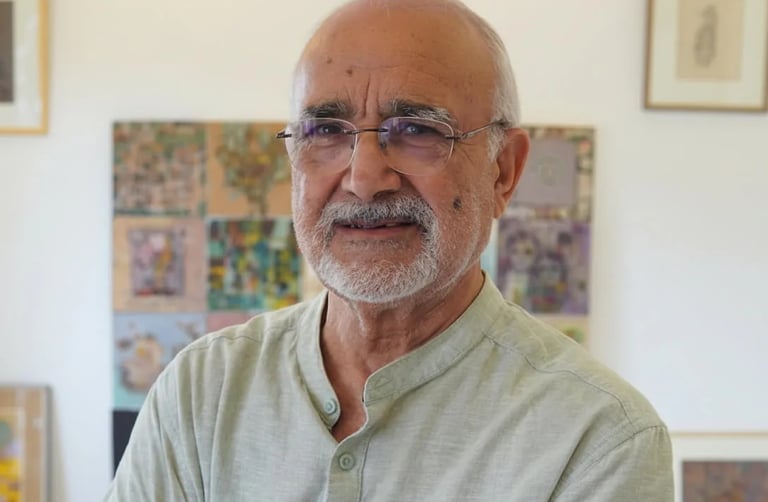
Moncef Guita was born in 1945 in Annaba. He spent his career in academia as a research scientist - he holds a PhD in Biology - then as professor at the University of Constantine. Until 1992, he had taken in parallel several highly-ranked positions at the ministry of education.
Guita is a self-taught, multi-skilled artist, exploring painting, sculpture and poetry. He made his first steps into art thanks to his Uncle Hamed Guita, an early artist established in Paris. Moncef, as a child visiting his uncle Hamed during school summer-breaks used to run all the museums and art galleries of the City of Light, where he discovered the power and beauty of the discipline worn by the great artists. He decided to practice painting as a hobby first; but the hobby became a sweet passion as times goes on and on.
Art of Art
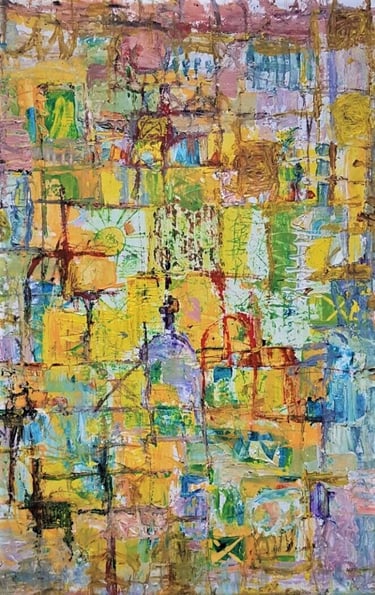
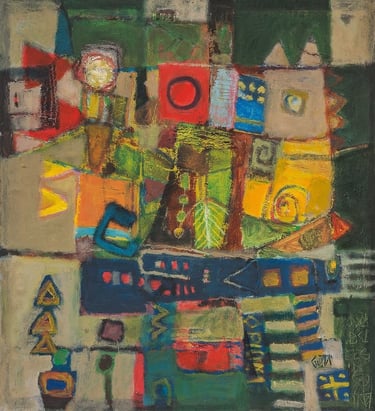
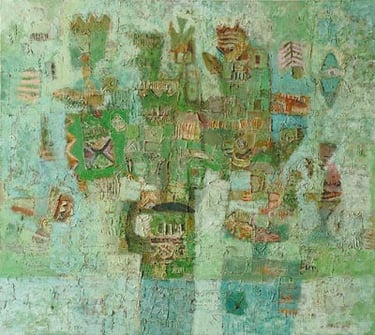
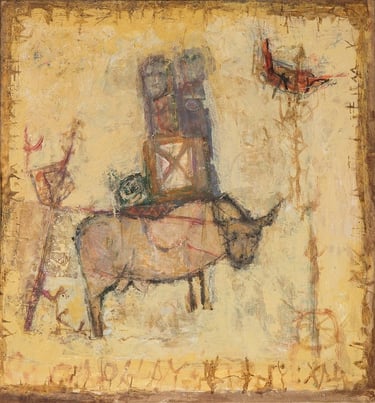
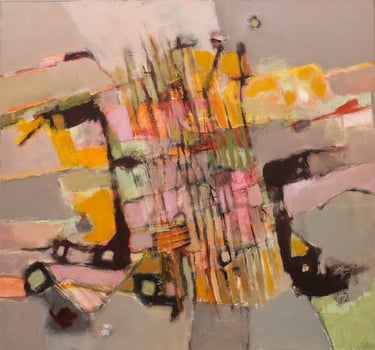
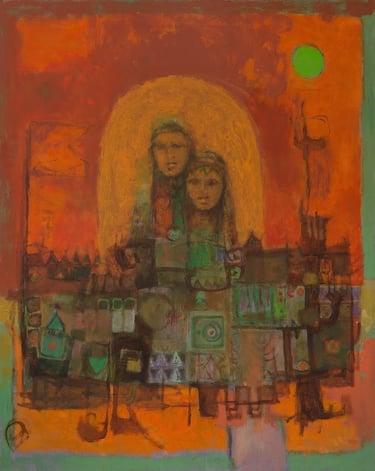
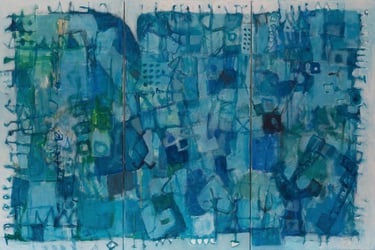
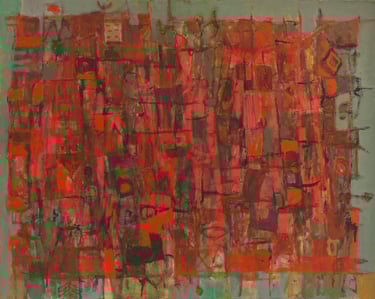
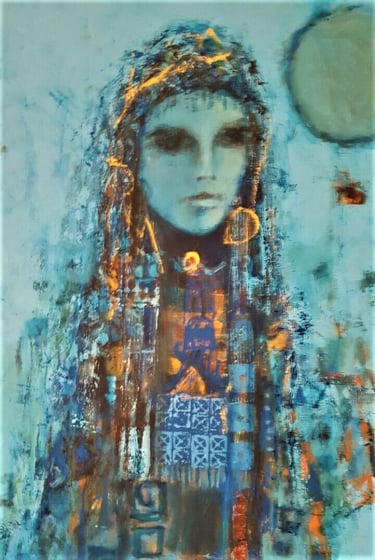
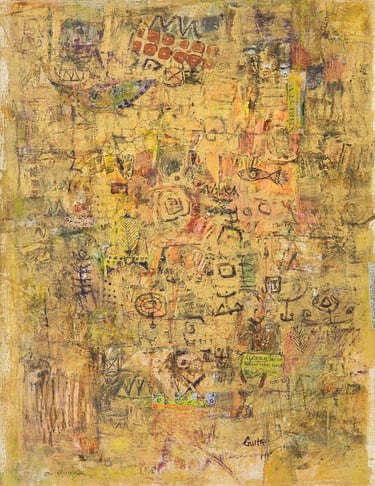
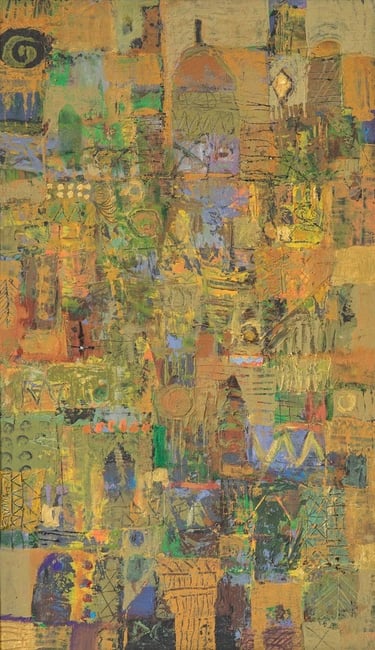
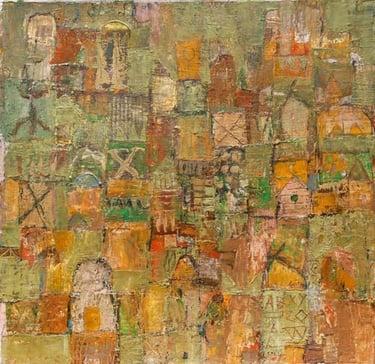
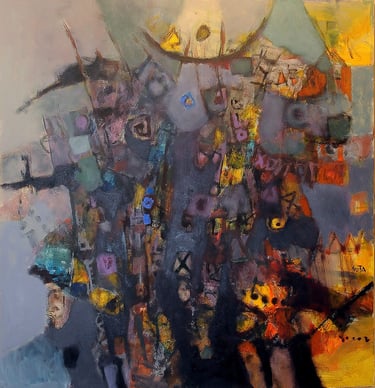
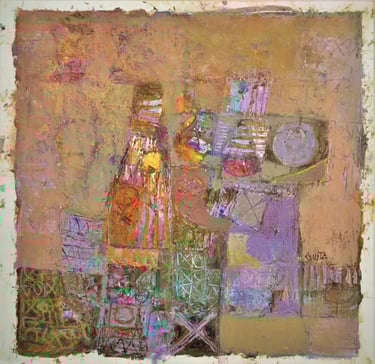
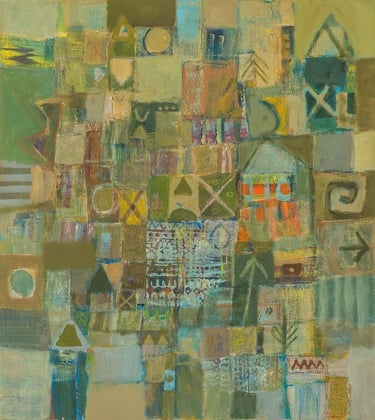
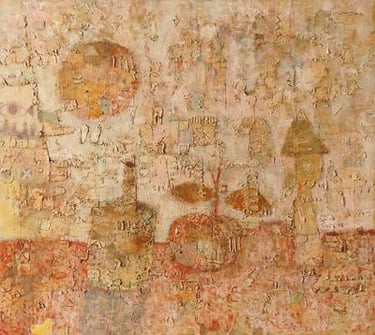
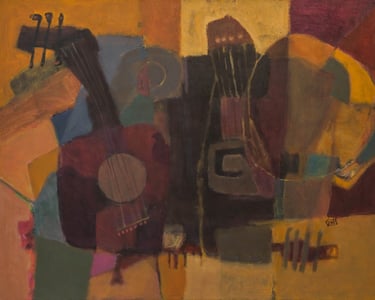
His semi-abstract style made of symbols and lively mysterious line patterns invites to imagination, with the help of the artist who deliberately points to the ends of the chain to help the visitor get through the labyrinths. ‘In fact, I make sure to give clues to help penetrate my artworks’, he once said. His feminine figures decked with gold are intriguing, while his sober compositions harmoniously favor shades of blue, tan and ocher. Most of his pieces are centered on three themes: women source of beauty and elegance, trees as symbols of life and cities referring to existence.
His main sources of inspiration include the ancient calligraphy like Tifinagh, universal mythology, and basic elements of nature. Moncef has particular ties to science: he borrows figures and colors from the biological entangled structures and forms he has been studying.
Major Exhibitions
For the last three decades, Guita has been uninterruptedly showing his work in minor and major events in the country and abroad (about 50). He was often invited abroad but his demanding academic duties could not allow as much as if he were living of his art. Selected international exhibitions include: France (1992, 1996, 1998, 2003, 2010, 2017); Syria (1998); Libya (1995); Romania (1995); Spain (1992, during the World Expo); Canada (2016); and South Africa (1995).